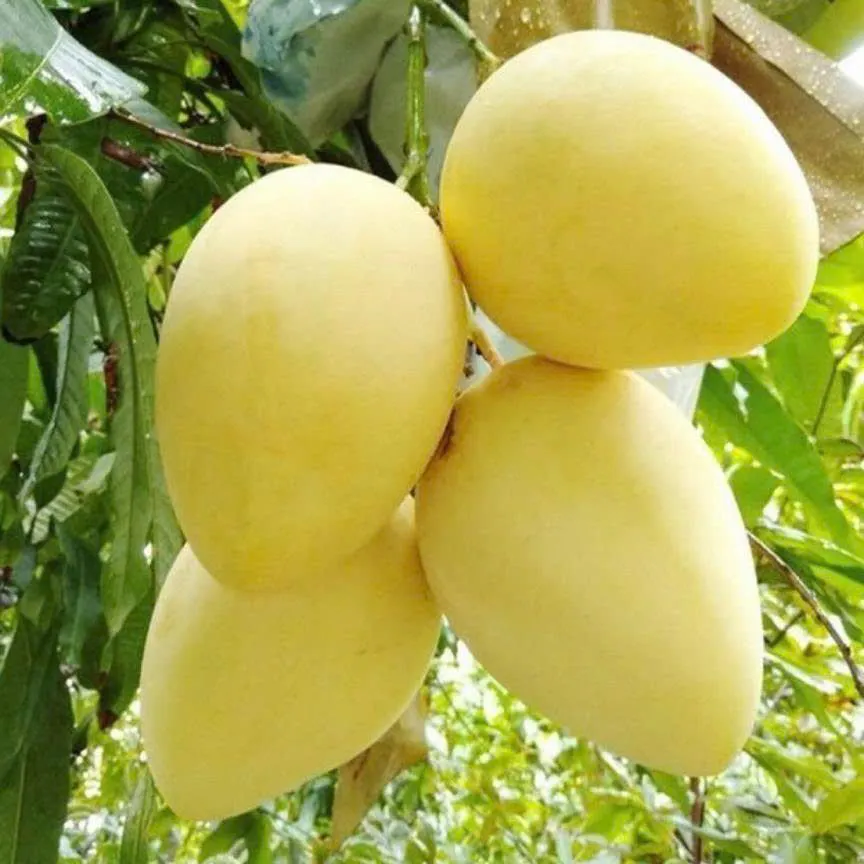
Hoa Loc Cat mango is one of the key mango varieties of Tien Giang province, grown mainly in Hoa Loc commune, Cai Be district, and spreading to neighboring communes along the Tien River. This variety is renowned for its rich sweetness, distinctive aroma, and high flesh ratio, making it suitable for both domestic and export markets.
Variety and growing region characteristics
Hoa Loc sand mango belongs to the mid-season mango group, with the main harvest period typically from the third to the fifth lunar month, depending on weather conditions each year. The fruit is elongated, with an average weight of 350–500 g, thin skin that turns from light yellow to orange-yellow when ripe. The flesh is deep yellow, low in fiber, with a flat seed, and the Brix level at ripeness usually reaches 18–22%, a level highly regarded by many importers.
The Cat Hoa Loc growing region in Tien Giang is located in an area of riverside alluvial soil, with abundant freshwater sources, and is less affected by saltwater intrusion compared to coastal areas. This is an advantage for maintaining stable fruit quality across seasons. Many orchards have been granted growing area codes (PUC) for export to markets with strict phytosanitary requirements.
Batch-level traceability
For export orders, batch-level traceability is a mandatory requirement from importers and quarantine authorities. Each shipment must be linked to a growing area code, packing facility code, and harvest log. Minimum information includes: harvest date, orchard code, variety, volume, packing date, container number, and destination.
At TFIMEX, the traceability process is carried out starting from field selection: confirming that the growing area code is still valid, checking the pesticide use logbook, and sampling for residue testing before harvest. After packing, each pallet or carton is labeled with a corresponding lot code, allowing reverse verification back to the field and harvest date upon request from the importer or regulatory authorities.
Standards for fruit eligible for export
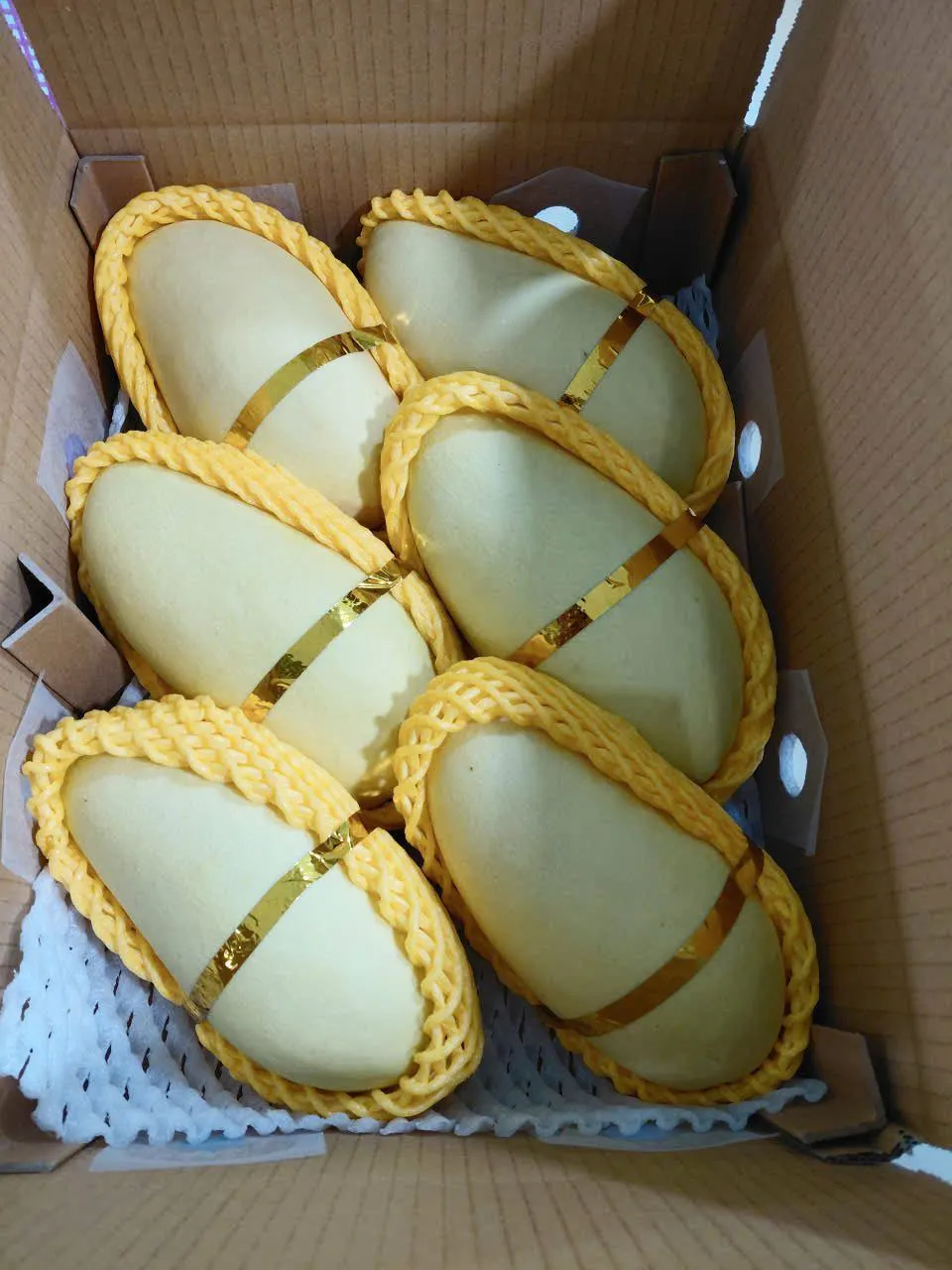
Hoa Loc sand mango for export needs to meet the following basic criteria:
- Ripeness: harvested at physiological maturity (85–90% of full ripeness) to ensure preservation and transportation time.
- Brix: minimum 16–18% when tested at the packing facility, depending on the specific requirements of each market.
- Size: graded by weight, with common sizes of 300–400 g, 400–500 g, and over 500 g; the allowable tolerance is typically ±5%.
- Appearance: whole fruit, not bruised or crushed, free from pests and diseases, no insect damage, stem still fresh or appropriately treated.
- Pesticide residue: meets the MRL thresholds of importing countries (South Korea, Japan, EU, etc.).
- Certification: VietGAP or GlobalG.A.P. for growing areas; phytosanitary certification issued by Vietnamese competent authorities.
Packaging and shipping
Mangoes are typically packed in 5 kg or 10 kg cartons, lined with foam or plastic trays to reduce impact. The recommended storage and cold transport temperature is 10–13°C, avoiding heat shock. For the Korean and Japanese markets, sea freight transit time is 7–14 days depending on the destination port; maintaining a stable cold chain is the decisive factor for quality upon port arrival.
Contact
To receive quotations, batch-specific specifications, or sample traceability documents, please contact: export@tfimex.vn.