Binh Thuan is Vietnam's key province for dragon fruit, with a large cultivation area and a system of growing regions granted export codes. In TFIMEX's supply chain, this is the main source of raw material for red-fleshed and white-fleshed dragon fruit orders serving the Korean, Japanese, and other demanding markets. This article provides information on the scale of VietGAP growing regions, procurement capacity, and the selection process at the orchard before entering the packing house.
VietGAP growing area scale
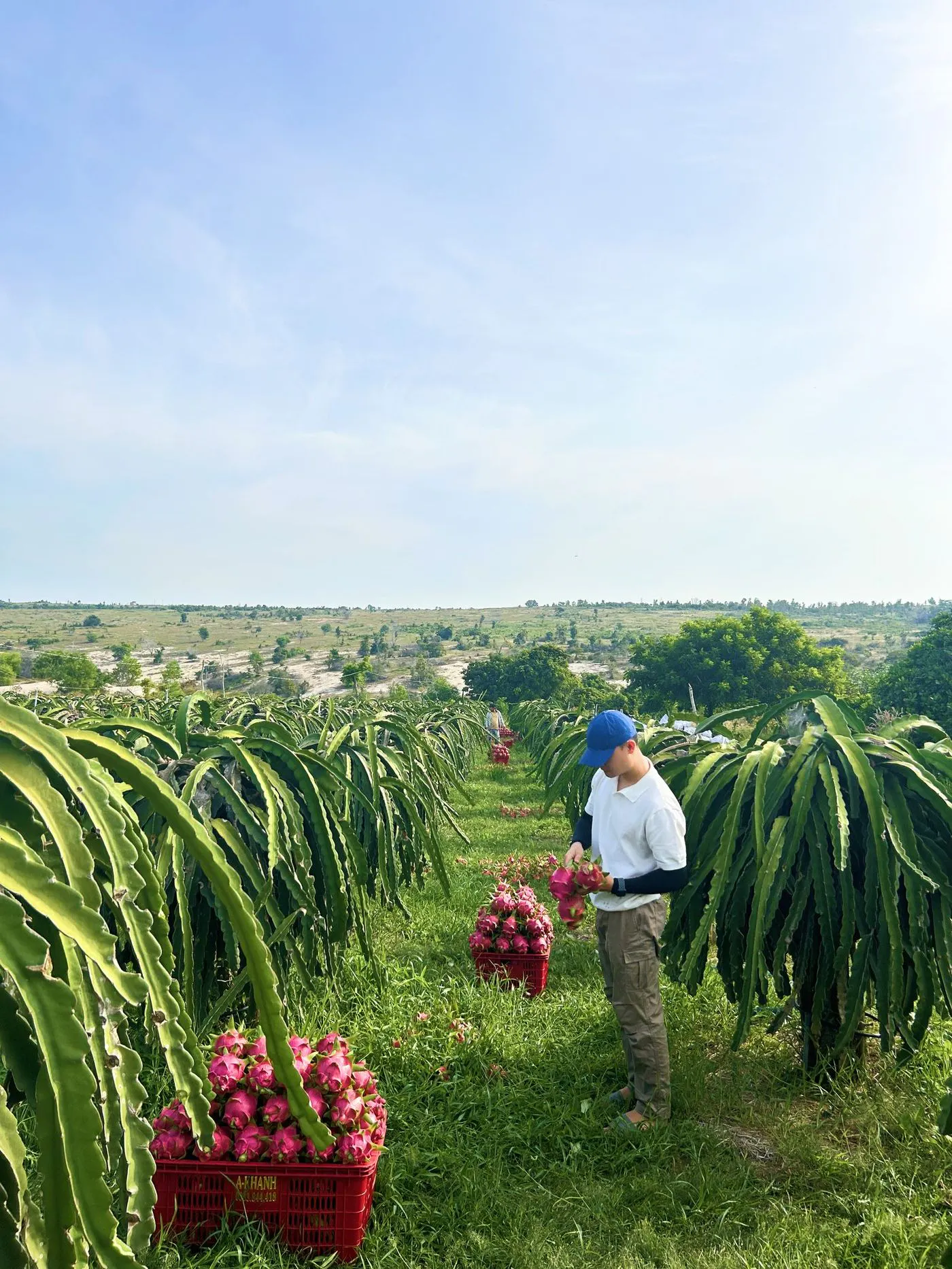
The dragon fruit raw material areas in Binh Thuan are organized into multiple cooperatives and cooperative groups applying VietGAP procedures. The area granted planting area codes is concentrated in Ham Thuan Nam, Ham Thuan Bac, Bac Binh districts and Phan Thiet city. Maintaining VietGAP certification requires strict control of seedlings, fertilizers, plant protection products and farming logs. TFIMEX prioritizes cooperation with growing areas that already have export codes to South Korea, Japan and China, while maintaining periodic assessments to ensure compliance with each market's standards.
Procurement capacity of 50-100 tons/day
At the peak of the harvest season, TFIMEX can mobilize a procurement capacity of 50 to 100 tons of dragon fruit per day from partner growing regions. This capacity is ensured by a procurement network across multiple communes, a team of field monitoring technicians, and a temporary cold storage system located near harvest points. Daily procured volume is allocated according to order plans, helping limit excess or shortage of raw materials. For container orders, procurement volume is finalized 24-48 hours in advance to ensure packing progress and shipping schedules.
Field selection process
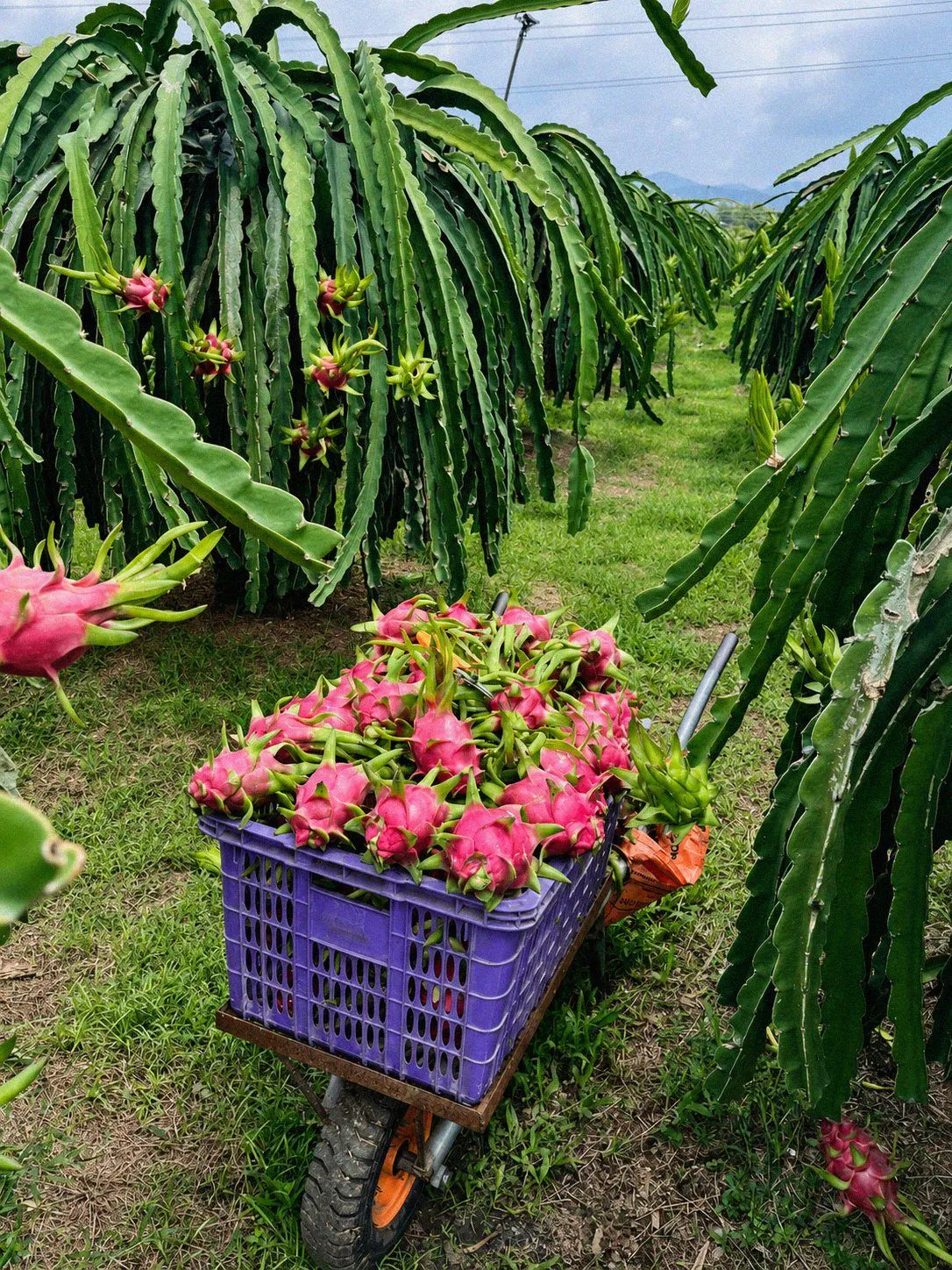
Before entering the packing house, dragon fruit is preliminarily selected right at the orchard. TFIMEX's procurement and technical teams coordinate with farmers to carry out inspection steps: assessing ripeness based on color and Brix, removing bruised, pest-infested, or deformed fruit, and preliminarily sorting by size. On-farm selection helps reduce damage rates during transportation, save sorting costs at the packing house, and ensure uniform input materials. The batches are then recorded with growing region codes, harvest dates, and transferred to the packing house in the shortest possible time.
Quality standards and technical specifications
TFIMEX's exported dragon fruit is controlled according to the following parameters: minimum Brix of 14-16% depending on the market, fruit size graded by weight (e.g., 300-400g, 400-500g, 500g+), characteristic color of the variety, and fresh green bracts. Shipments to South Korea and Japan typically require vapor heat treatment (VHT) to meet phytosanitary regulations. The cold chain is maintained from post-harvest through container loading, with storage temperatures appropriate for each type of dragon fruit.
Quality control at the packing house
At the packing house, dragon fruit is washed, cleaned, sorted by size, and packed according to each customer's requirements. The quality inspection process includes visual inspection, Brix measurement, and pesticide residue testing by batch. The traceability system allows identification of the growing area code, harvest date, and packing batch, meeting the traceability requirements of importers.
Conclusion
The Binh Thuan dragon fruit raw material zone, with VietGAP scale and a procurement capacity of 50-100 tons/day, is the foundation for TFIMEX to supply stable goods to export markets. The selection process at the farm combined with control at the packing house helps maintain uniform quality and meet the technical requirements of B2B customers. To discuss product specifications, container schedules, and certifications, please contact export@tfimex.vn.